Bed bug hiding places are usually worth checking first around the bed and other places where people sleep or rest. Start with accessible mattress edges, the base, frame and nearby furniture, then document what you find. This ten-location checklist helps you organise a visual check without shifting suspect belongings through your home.
The order below is a practical route through a room, not a ranking of infestation frequency. This guide from GRMC Pest Control Lebanon uses the public-agency and university sources linked throughout. It does not describe a tested GRMC customer case.
Before you start: use a torch, your phone and a simple location record. Do not diagnose bed bugs from skin marks alone. EPA guidance recommends identifying a specimen and noting the dates and exact places where pests are found. Stop disturbing the area if you find a suspected insect and seek identification.
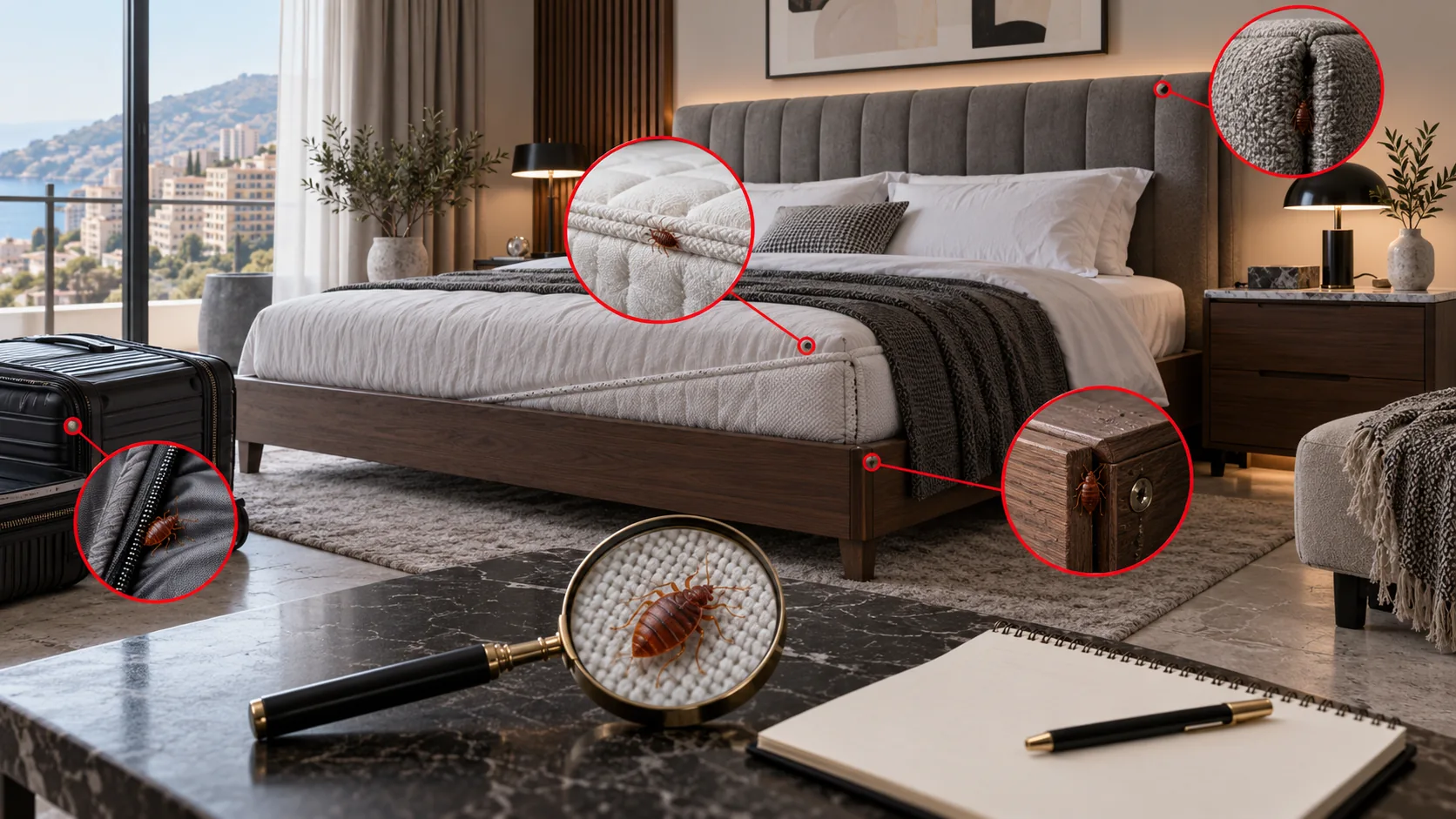
10 bed bug hiding places to check
1. Mattress seams and labels
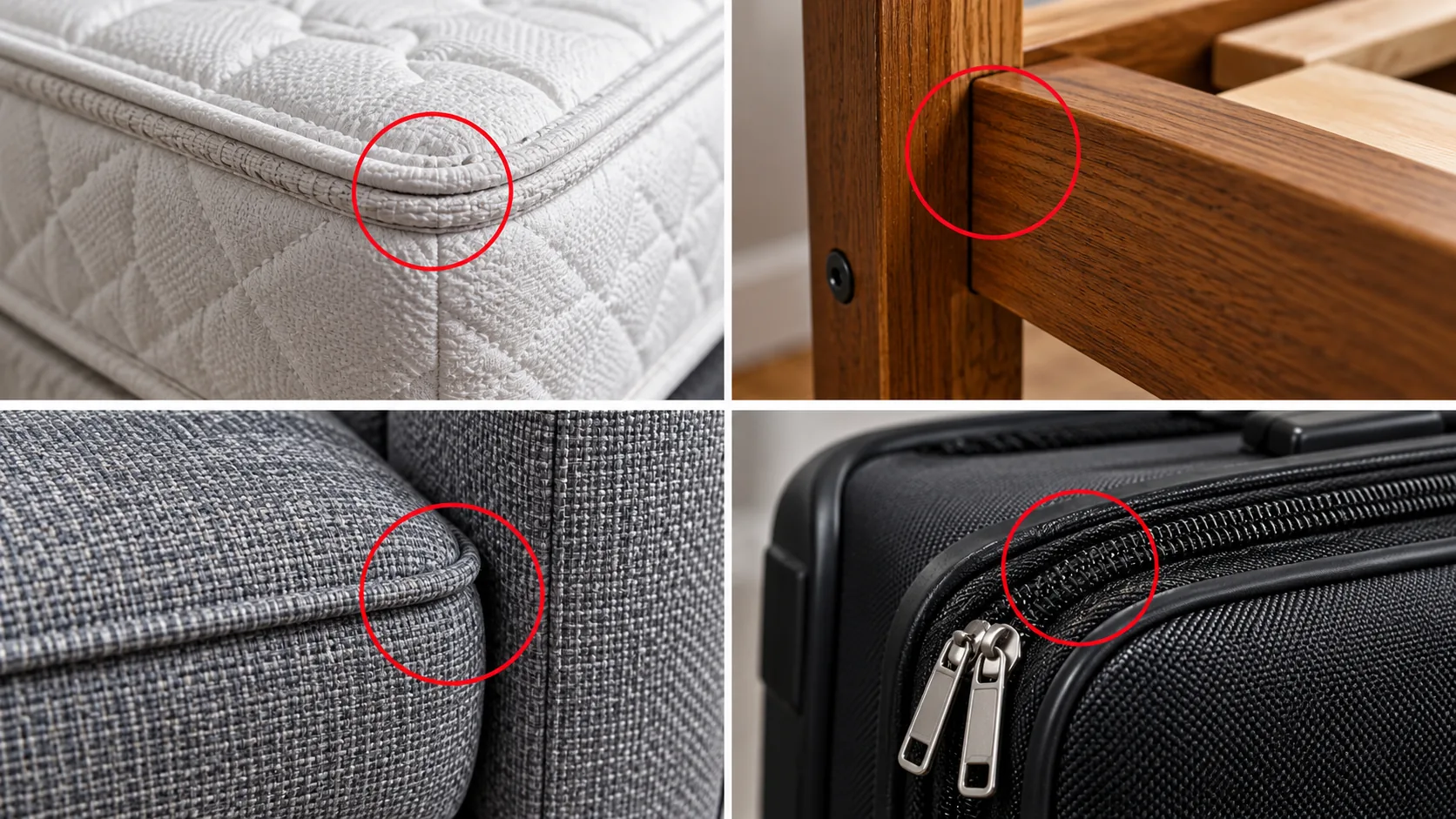
Follow the accessible stitched edge and look around labels, folds and corners with a torch. Work along one edge at a time so your notes identify a location rather than just “the mattress”. Photograph anything suspicious in place, then take a wider photograph showing the corner. Do not drag the mattress into the hallway to get better light. If it is too heavy to inspect safely, leave the inaccessible area for the technician.
Source: University of Maryland Extension
2. The bed base or box spring
The sleeping surface is only part of the bed. Look at the accessible seams and joins of its base, including a box spring if your bed has one. Note whether evidence is on the base or the mattress; that distinction helps define the inspection scope. Do not tip a heavy base alone, tear its covering or start emptying an entire storage bed. Explain the construction and access limits when arranging an assessment.
3. Bed-frame joints and screw recesses
Check visible joints where the rails meet the legs or other frame pieces. Small gaps are worth recording even when the main surfaces look clear. Use light rather than pushing objects into cracks to force insects out. For a photograph, describe the joint as “foot end, left side” or another fixed reference. Leave dismantling to an agreed inspection plan, especially with a fitted, unstable or difficult-to-reassemble bed.
4. The headboard and its wall-facing edge
Look along the reachable headboard edges and the joins between its sections. A clean pillow does not tell you what is happening behind the headboard. Record whether the board is free-standing, attached to the bed or fixed to the wall; the technician may need different access for each. Do not pull a mounted headboard off the wall. Mark the edge you could see and clearly identify the area you could not inspect.
Source: University of Maryland Extension
5. Bedside furniture and drawer joints
Check the accessible corners and joints of the bedside cabinet, rather than moving its contents into another room. Record which drawer or cabinet side has a suspicious mark. Avoid spreading small belongings over a clean bed while searching. If a drawer cannot be examined without substantial movement, photograph its position and include it in the professional inspection request. One marked cabinet does not establish whether every item inside is affected.
Source: EPA detection guidance
6. Sofa seams and cushion gaps
Include furniture where someone regularly rests or sleeps, not just the bedroom. Look at accessible upholstery seams and gaps between cushions without carrying the cushions elsewhere. Note the particular seat and whether it is used for overnight sleeping. That information is useful in a furnished apartment or a home where the sofa doubles as a bed. Do not move to a different sofa simply to avoid the suspected area before discussing the situation.
Source: Cornell IPM management guidance
7. Curtain folds near resting areas
Look at reachable folds, especially when curtains sit close to a bed or sleeping sofa. The EPA lists curtains among places to consider when an infestation is more extensive; they are not proof of the source. Record which window and fold you examined. Do not climb onto furniture, shake the curtains or carry them uncovered through the home. Ask whether the treatment plan requires removal and how that should be done.
Source: EPA detection guidance
8. Skirting-board gaps beside the bed
Follow the visible line where the lower wall trim meets the floor, concentrating first on the sleeping area. Photograph a suspected mark with a nearby furniture leg or corner in view so it can be found again. Do not remove trim, lift fitted flooring or seal every gap before the inspection. Ask what should remain accessible for assessment and which repairs can follow the treatment plan.
Source: EPA preparation guidance
9. Picture-frame edges and loose wall coverings
Wall-mounted objects can create small sheltered spaces. Inspect only edges you can reach safely and record evidence without taking the room apart. Mention a loose wall covering or fixed picture beside the bed when booking. Do not open electrical sockets, remove switch plates or spray into them while investigating nearby wall gaps. If electrical areas may be involved, leave their examination to suitably qualified people working within the pest-management plan.
Source: University of Minnesota Extension
10. Luggage seams and belongings near the bed
Check where travel bags were placed and stored, looking at accessible seams and folds. Note the item and location instead of spreading its contents around the home. A bag can be a transport route as well as a hiding place; its presence does not prove when or where an infestation began. Keep suspect belongings separate and ask for containment instructions before moving them to a laundry, another apartment or a storage unit.
Source: University of Minnesota Extension
Turn observations into an inspection plan
Use the same record for each observation: room, exact item, side or joint, date, photograph and whether you found an insect or only a mark. Write “not inspected” for inaccessible areas. This gives a provider a clear starting point and avoids confusing an untouched area with a negative finding.
For example, “bedroom, left headboard edge, photographed on Tuesday” is more useful than “bugs everywhere”. The example is a way to organise information, not a diagnosis. A blank checklist does not rule out a small or hidden infestation.
In a Lebanese apartment, tell the property manager about a confirmed finding and ask how access to relevant neighbouring areas will be coordinated. Do not assume which apartment was the source. For pest-specific assessment, discuss bed bug treatment in Lebanon rather than booking a general spray without explaining the evidence.
The EPA preparation page advises against moving belongings from affected areas to unaffected rooms. Get the proposed provider’s instructions before extensive clearing or disposal. Inspection identifies the problem; choosing a treatment is a separate decision. Our bed bug heat vs chemical treatment comparison explains the questions to ask about those options.
Frequently asked questions
What are the first bed bug hiding places to inspect?
Start with the accessible parts of the bed and nearby resting furniture. Look methodically at seams and joins rather than scanning only broad surfaces. The exact starting point should also reflect where a suspect insect was found.
Can bed bugs be present without obvious bites?
Skin reactions do not reliably establish whether bed bugs are present. EPA detection guidance recommends physical evidence instead. Ask for identification of a suspected insect rather than making a diagnosis from a rash or bite pattern.
Does a spotless room rule them out?
No. A room can offer small furniture gaps even when its visible surfaces are tidy. Removing clutter may make assessment easier, but cleanliness alone is not an identification test.
Should I throw away the mattress immediately?
Do not make disposal the first step. Ask for an assessment and a containment plan before moving bulky belongings. Carrying a suspect mattress through the building without planning can create further problems.
Can I use a spray to flush bugs out?
Do not spray or use improvised heat merely to force insects into view. Record accessible evidence and discuss the inspection with a professional. Products and treatment methods need their own suitability and safety checks.
What should I send when requesting help?
Send a clear close photograph, a wider image of its location and notes about when it was found. Mention recent furniture or luggage movements without assuming they caused the problem. Ask what to leave undisturbed before the visit.
Arrange an assessment from Beirut to Batroun
GRMC’s Lebanon service area runs from Beirut to Batroun. Contact GRMC Pest Control with your observations and exact location.